

Netherlands, 1 of 2
Payment for Ecosystem Services (PES) Scheme Overview
BIODIVERSITY BOOSTERS
Incentivising individual dairy farms to implement sustainable agricultural practices that enhance biodiversity.
About the Scheme
This PES scheme provides incentives to individual dairy farms to implement sustainable agricultural practices that contribute to biodiversity enhancement. The Biodiversity Boosters, connects companies that want to invest in nature restoration with farmers and land managers who provide space for biodiversity. This scheme is in launch phase and was initiated by a.o. the Dutch dairy cooperative FrieslandCampina (FC, project partner) with 9,000+ farms members.
This initiative connects private entities seeking to fund biodiversity projects with farmers willing to receive financial incentives to adopt biodiversity enhancing practices (e.g., meadow bird protection, agroforestry), also generating co-benefits like pollination and enhancing landscape quality.
Meadow Bird Protection
Measures to protect breeding grounds in grasslands.
Agroforestry
Integrating trees and shrubs into pasture systems.
Co-Benefits
Boosting pollination and landscape quality across pastures.

©BEEODIVERSITY
The Business Case
Strategic Interest for the Private Sector
This scheme offers private companies’ connection with farmers who deliver environmental outcomes aligned with their environmental, social and corporate goals and regulatory obligations.
Corporate Goals
Align corporate sustainability targets directly with verified impact on Dutch dairy grasslands.
SBTN Alignment
Provide science-based indicators required for Science Based Targets Network reporting.
Biodiversity Credits
Establishes an early-mover pipeline to enter emerging voluntary biodiversity credit markets.
Intended Expansion Strategy
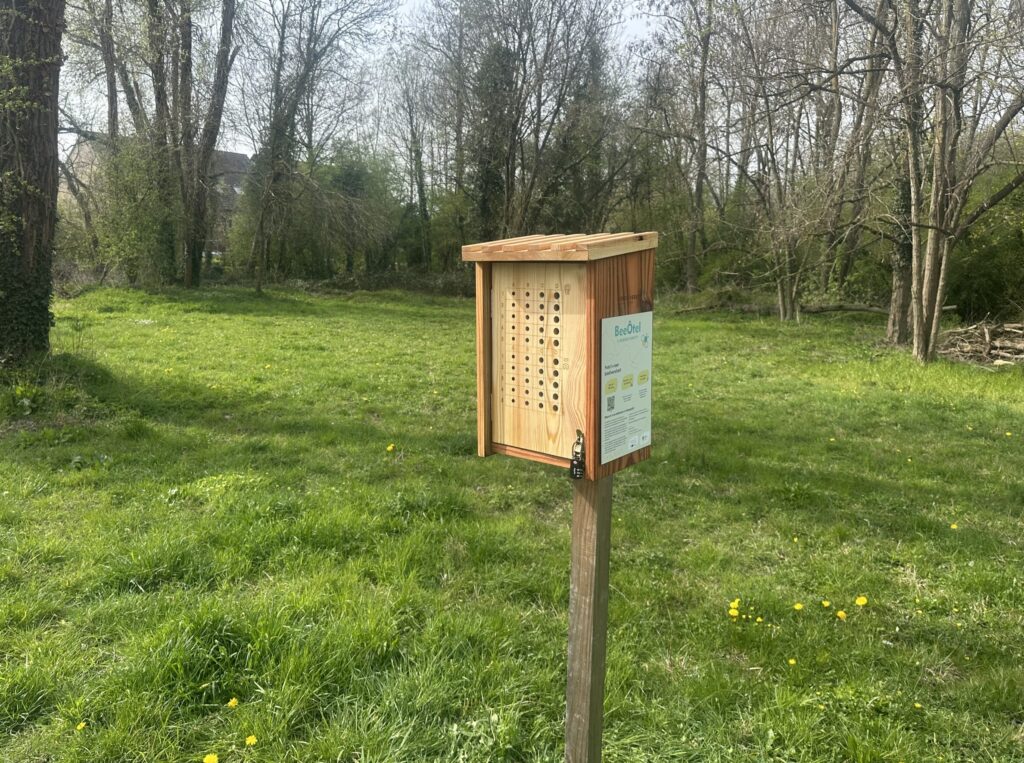
Implemented and scaled in Dutch dairy grasslands following a result-based model where FC connects farmers and private investors, rewarding farmers based on results verified with project tools (e.g., BeeÔtel).
Year 1
Pilot Replication
Funding Mobilised: €4,800
The initiative will begin by enrolling 3 farms and ~24 ha (8 ha/farm) in the Biodiversity Boosters initiative. Payments based on verified results will be launched based on ECOPESIA’s tools to ensure reliable verification.
Farm Target
3 Farms
Land Coverage
~24 ha (8 ha/farm)
Year 2
Consolidation
Funding Mobilised: €12,800
Building on the pilots, the scheme will expand to adjacent areas, enrolling a total of 8 farms and 64 ha. During this year feedback will be applied, and the scheme will consolidate.
Farm Target
8 Farms Total
Land Coverage
64 ha Total
Year 3
Expansion
Funding Mobilised: €30,000
The scheme will extend to 18 farms and 150 ha, expanding the scheme along the NL.
Farm Target
18 Farms Total
Land Coverage
150 ha Total
Challenges and Opportunities
Key challenges to scaling and potential adoption across EU permanent pasture systems.
Scaling Barriers
1
Measurement and Annual Audits
Environmental outcomes measurement systems are still under development and relies on annual audits, which are time consuming and may not verify outcomes accurately.
2
Long-Term Contract Validation
The model depends on validating cost-effective monitoring systems, assessing proper impacts and establishing legally sound contracts to secure reliable, long-term (6+ years) private investment.
Potential Transferability
High upscaling potential due to flexible support to both small and big dairy farms. This PES already attracts long-term biodiversity investors who already shown interest. This model is highly transferable to countries where pasture-based dairy farms are present along with cooperatives, and where permanent pastures represent a significant share of agricultural land such as:
Ireland 81% of agricultural land are permanent pastures.
France 45% of agricultural land are permanent pastures.
Poland 22% of agricultural land are permanent grasslands.
Netherlands, 2 of 2
Payment for Ecosystem Services (PES) Scheme Overview
Landscape Fund for Peat Meadows Restoration
This PES supports farmers applying sustainable practices such as multispecies grasslands or reduced inputs to restore and enhance landscape-level biodiversity and ecosystems.
Region
Alblasserwaard, Vijfheerenlanden Region
Owner
De Graafstroom, DeltaMilk (200+ members)
15 Farms
150 ha Target (Year 3)
About the Scheme
Alblasserwaard–Vijfheerenlanden region is a lowland peat meadow landscape that experiences the challenge to recover biodiversity in pastures and landscapes traditionally dominated by dairy farming.
De Graafstroom, a dairy processing company of the DeltaMilk cooperative (200+ members), is involved in the development a landscape fund to mobilise funding. The collective action will bring together farmers, administrations, advisors and private investors for participatory financial reward to foster long-term nature restoration.
Herb Rich Grasslands
Restores pasture biodiversity and soil structure.
Reduced Inputs
Tackles nutrient enrichment from heavy fertilizer use.
Collective Reward
Pairs farmers with private investors for impact.
©BEEODIVERSITY
The Business Case
Strategic Interest for the Private Sector
Participatory landscape investment with CSRD compliance for businesses of all sizes.
Participatory Approach
A landscape fund offers a way to invest in local nature restoration, but also a platform to jointly define negotiations and how contributions are used (participatory approach), allowing investors to have a voice in defining priorities and contributions.
EU CSRD Alignment
This initiative provides direct, verifiable input for the EU Corporate Sustainability Reporting Directive (CSRD, see section 1.1.5), allowing companies to report tangible corporate nature contributions.
Open to SMEs
The fund is open to companies of all sizes, enabling Small and Medium Enterprises (SMEs) to participate while still contributing meaningfully to collective landscape impact.
The Business Case
Strategic Interest for the Private Sector
This scheme offers private companies’ connection with farmers who deliver environmental outcomes aligned with their environmental, social and corporate goals and regulatory obligations.
Corporate Goals
Align corporate sustainability targets directly with verified impact on Dutch dairy grasslands.
SBTN Alignment
Provide science-based indicators required for Science Based Targets Network reporting.
Biodiversity Credits
Establishes an early-mover pipeline to enter emerging voluntary biodiversity credit markets.
Intended Expansion Strategy
The landscape fund will be upscaled, engaging multiple actors in coordinated ecological restoration. This scheme will make use of ECOPESIA tools for monitoring, aiming to attract private investment.
Year 1
Pilot Replication
Funding: €6,000
The initiative will begin by enrolling 3 farms and ~30 ha (10 ha/farm) in the Landscape Fund initiative. Payments will be guided on verified results will be launched using ECOPESIA’s tools to ensure reliable verification. Funding: €6,000 (based on a €200/ha average payment).
Farm Enrollment
3 Farms
Land Coverage
~30 ha (10 ha/farm)
Year 2
Consolidation
Funding: €16,000
Building on the pilots, the scheme will expand to adjacent areas, enrolling a total of 8 farms and 80 ha. During this year feedback will be applied, and the scheme will consolidate.
Farm Enrolment
8 Farms Total
Land Coverage
80 ha
Year 3
Expansion
Funding: €30,000 Mobilised
The scheme will extend to 15 farms and 150 ha, expanding the scheme along the NL.
Farm Enrolment
15 Farms Total
Land Coverage
150 ha
Challenges and Opportunities
Key challenges to scaling and potential adoption across EU permanent pasture systems.
Governance and Multi-level Framework
Key stakeholders such as producers and beneficiaries of environmental services have been identified, and priority services discussed. However, the governance structure remains undefined, including fund management, stakeholder participation, and reward negotiation.
Model Scalability
This model is highly scalable to regions with peats meadows with intensive farming, backed-up with an active community in agri-environmental initiatives for landscape restoration (e.g., South Holland, Utrecht province).
Germany 70+% Degrade
Over 70% of peat soil degraded by farming, with high demand for structured landscape restoration funds.
Ireland 90,000+ ha
90,000+ ha classified as drained peat grasslands offering prime locations for community landscape funds.
Denmark 170,000+ ha
170,000+ ha are drained peat soils with active agri-environmental communities ready for transferability.